“Can you trust your emotions? What is the purpose of your emotions?” If someone asked you that, how would you reply? As someone who’s dealt with some heavy emotions like grief and fear, I of course have a different perspective that someone with a different life story that hasn’t dealt with loss. As my friend asked these questions, I happened to be driving, but as I listened, an analogy came to me.
“Emotions,” I explained my friend, “are a lot like the hot/cold gauge on your car dash.” If your gauge is reading extremely hot or extremely cold, you should first check for the problem under the car hood, not start with trying to fix the gauge.” Unless you live in a redneck zone, of course, at which point you should assume that the engine needs duct tape and the dash gauge is permanently broken. 🙂 Emotions are indicative of other things, and if you can address the real engine problem, the gauge can function in its normal parameters, like it should.
Sometimes, of course, the root of emotions is a simple physical need. Sleep-deprived babies don’t need a scolding on how to manage their emotions, when what they really need is sleep. A hypoglycemic person who’s irritable needs glucose, not a pamphlet on remaining calm under stress. I’m not speaking of scenarios like this, but rather to people who are confused about emotions that arise from life events and their responses to other people.
When people are afraid of or confused about their own emotions, they tend to take one of two routes. They may become stuffers, suppressing their emotions and trying to squash them into a file folder that they don’t access. These people often aren’t willing to address their negative emotions, so they choose to go emotionally flatline. They are Iron Man with a stiff upper lip, un-touchable and tough. Life can’t hurt them. Oh, you’re crying? Tears, they think, are for the weak. The problem with the Stuffer Mentality is that joy and sorrow are inter-connected. The height of the joy you can experience is often in contrast to the amount of sorrow you have experienced. It’s much like a tree; soaring 50 foot limbs come with a deep root system. If your root base isn’t deep, strong, and unseen, the tree cannot endure the windstorms and produce a multi-generational heritage of strength and growth. If you don’t want to feel any sadness in your life, you have probably also squashed your opportunity for joy.
I think of these Stuffers as emotionally stunted, not emotionally healthy. They have found a way to cope with life’s disappointments, but it’s a form of shriveling up inside and slowly dying. As they wither inside, they edge more towards being a human robot than being a fully alive human. Life shrinks down to a narrowed bandwidth of functionality, not vitality.
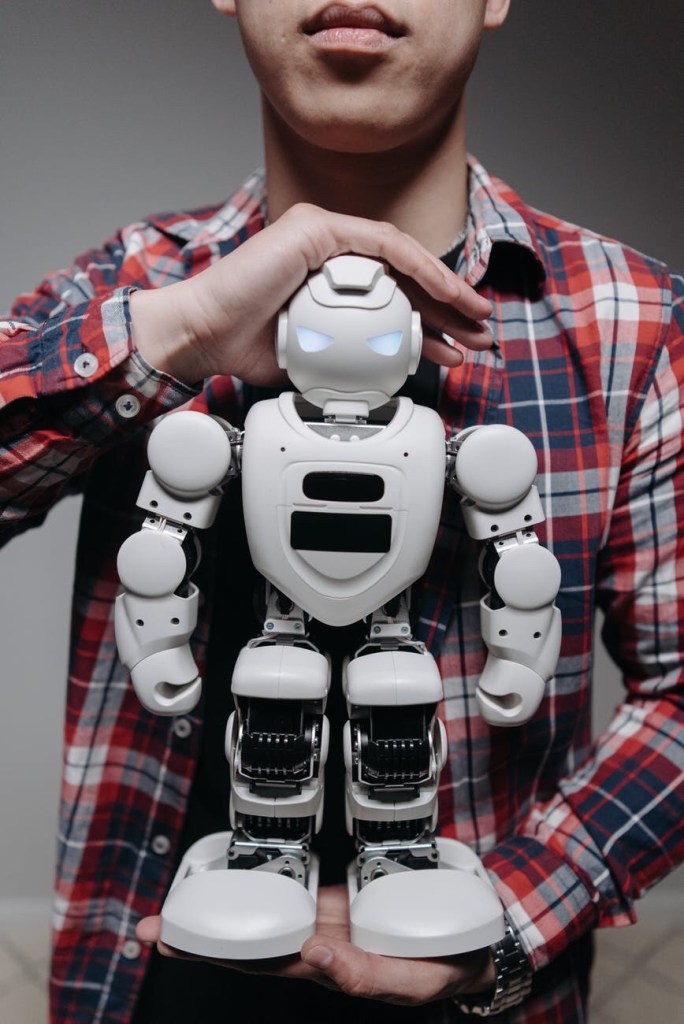
Often, at least from my personal experiences, if these Iron Stuffers are men, the only emotion they express with regularity is anger. The irony is that anger is considered a secondary emotion, not a primary emotion. This means that in order for anger to be experienced, there was another emotion or response first. That may be fear from being startled (think a prankster jumping out at you in the dark), pain from being hurt (yelling at someone after they smash your thumb), or frustration from impatience. The anger is only the lava burbling out of the volcano, and the rest of the emotions are the chemical catalysts inside causing the lava to spill over.

If we are a Christian, we can turn to Jesus our perfect example. How did Jesus handle emotion? Well, He wasn’t emotionally flatline. He drove the money changers out of the Temple in a display of anger, saying they were violating God’s house of prayer. He didn’t make a dusty announcement in a perfectly modulated crowd control voice, “Hey, you guys need to get out, you shouldn’t be selling merchandise in the Temple.” He used anger in a right way. He also blessed the tears of the weeping woman who anointed His feet. He didn’t say, “Stop crying, it will all be fine.” He welcomed her expression of worship toward Him. (Luke 7:36-50) And in perhaps the most astounding display of Messianic humanity, in John 11, Jesus wept before the tomb of his buried friend Lazarus, minutes before raising Lazarus back to life again! Not only was Jesus weeping, He was “groaning in Himself.” He felt genuine emotional pain. And Jesus was not afraid of displaying His emotions. As He provided our perfect example, we don’t need to fear our emotions either.
On the other extreme seem to be the individuals who are controlled by their emotions, powerless puppets manipulated by unseen strings. Anger jerks them here, frustration grabs them there, and they dance to the whims of reactionary responses. Life is emotionally charged and chaotic. The classic illustration for this is probably teenagers and their fluctuating hormones and coming-of-age battles, but it’s gripped many other people too. I’ve known elderly people who had ripped apart many relationships in their lifetime because of a lack of emotional discretion.
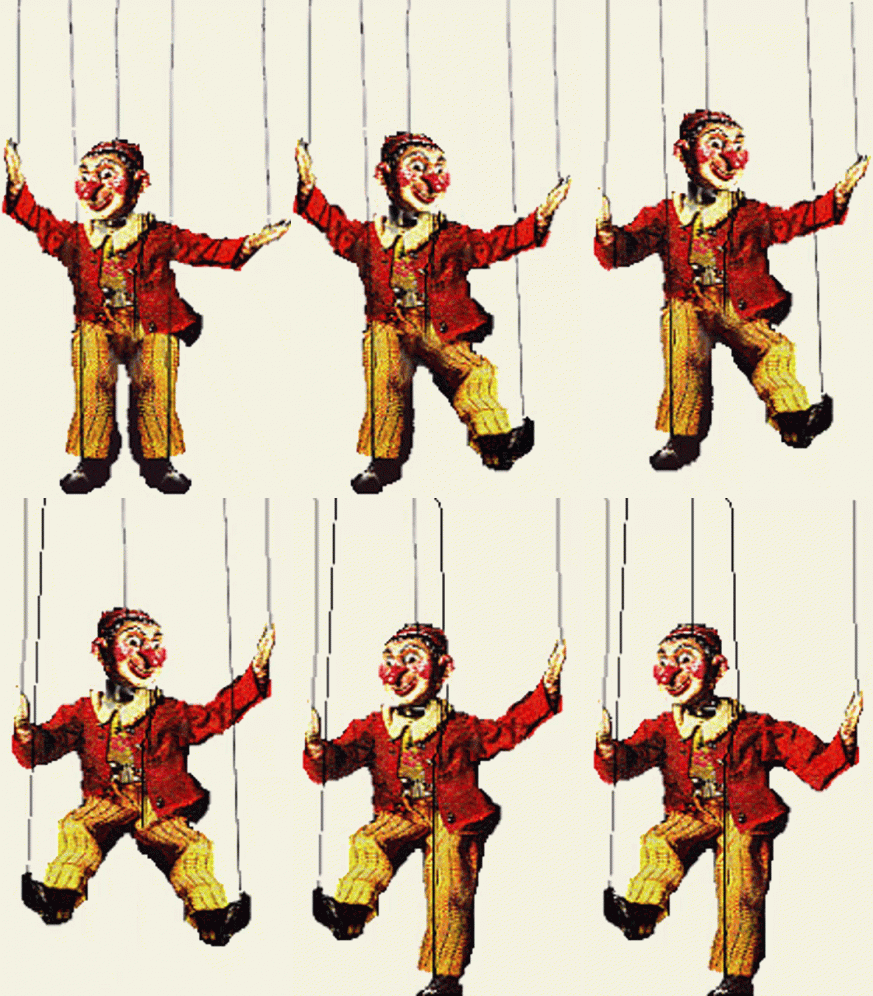
Of course, the Emotional Puppets and the Iron Stuffers are two extremes, and sometimes we stuff emotions and the next day we might feel them in all their octane-fueled intensity, depending on the scenario. I am painting in broad strokes for conciseness on a topic that could fill pages.
So once again we ask, “How did Jesus respond to emotions?” By now we’ve established that He felt and expressed them, but there’s another facet: He surrendered them. In the Garden of Gethsemene, on a lonely, abandoned night vigil, Jesus agonized in an emotional, mental, and spiritual battle so intense that His capillaries burst and His sebaceous glands sweated blood, not just sweat. He labored before the Father in an agonizing wrestle, while heaven and hell watched with uncertain breath and earth slept unconcerned. His spirit was tortured in those hours as surely as His body was laid to the butchers in the hours following. And our Savior put His emotions and His will in His Father’s hands and said, “Not what I want, but what You want.” Luke 22:42, 44
As we look to Jesus, we find the perfect God-man who didn’t stuff His emotions, but wasn’t controlled by them either. He laid them into the Father’s hand like a child brings a favorite toy and says, “Mommy, hold this for me.” Sometimes that toy is broken when we hand it to the Father. What a comfort to realize then that He can heal broken things. I’m walking proof of the Father’s emotional healing, being able to live in peace instead of merely avoiding triggers. But that healing can only happen when we let go of our tightly clutched possession and say, “Not what I want, but what You want.”
Do not avoid your pain. Do not stuff your grief. Don’t even fear your anger and depression. But don’t be ruled by them either. Learn to approach the Father with the trust of a child and release them into His hands. “Help me, Abba, I don’t know what to do with this.” Sometimes He heals the pain. Sometimes He tells you to repent of sin or make restitution with someone. But He never tells you to stuff your emotions, that they don’t matter, and He can’t be bothered with them. Nor does He want you controlled by them, kicking your little puppet legs wherever the emotions tug. He’s your Father. He’s the safest keeper of your emotions.
“Pour out your hearts before Him, God is a refuge for us. Selah.” Psalm 62:8


Tina thank you for this very clear explanation of emotions! So much to think about!
LikeLike