
As an avid houseplant nurturer, it didn’t take me long to realize the similarities between a plant and the one who provided it with its sustenance. I began acquiring houseplants for their living aspect; I wanted more live presence on my shelf than a Willow Tree figurine could give. So I picked up a few houseplants, originally a spider plant, small cactus, and a few echeverias, and fell into the category of The Plant Lady. Now, my houseplant number nears 40, and through the past few years of nurturing them, I have learned a few things that apply to much more than botanical life.
In a world spattered with millenials, it is likely you know one of The Plant Ladies. The one who discusses her plants as though they are a personal friend instead of a possession would fall into that category. The upside of this mentality is that we Plant Ladies view our plants through fresh eyes, quick to learn from their progress.
My husband has described me as a nurturing person and stated that is my drive for loving gardening, caring for my pets, and growing houseplants. When I found Dusty Hegge at houseplantacademy.com, I had a relatable resource for learning backgrounds to the different types of houseplants and the importance of understanding their individual needs for care. Best of all, when I discovered Dusty’s audio resource, the Grow Well podcast, I found her further elaborating on what I had already found true myself: that houseplants and humans can parallel in their needs and their growth patterns. Allow me to explain.
Some similarities are obvious; both houseplants and humans need light, whether sunlight for photosynthesis or the light of Jesus for healthy spiritual development. We both need water, that is a biological given. But beyond that, there are several more analogies from which we can learn.
One of my favorites analogies is that life continues in cycles of growth and rest. As I observed my houseplants, I noted seasons, usually in sync with the weather outdoors but sometimes due to fertilizer, of bursts of new life and then a maintenance period where the new leaves would mature nearly imperceptibly. It was as if the whole plant was catching its breath. Weeks or months might pass before the next subtle stirring and uncurling of new leaves. Through this observation, I came to understand that life is not only the mountains and valleys; there are switchbacks on the trails, and long steady stretches through the meadow with no markers of grandeur or achievement. But without the uncelebrated faithful steps of maintenance, there would be no new views. Faithfulness is as much a mark of the Christian journey as are breakthroughs and victories, and the mundane is not to be despised. An elementary schoolteacher would describe this maintenance as review, where students practice familiar concepts lest they slip from the students’ understanding. A houseplant teaches the value of maintenance as a form of rest. “Be still before the Lord and wait patiently for Him,” Psalm 37:7, NIV.
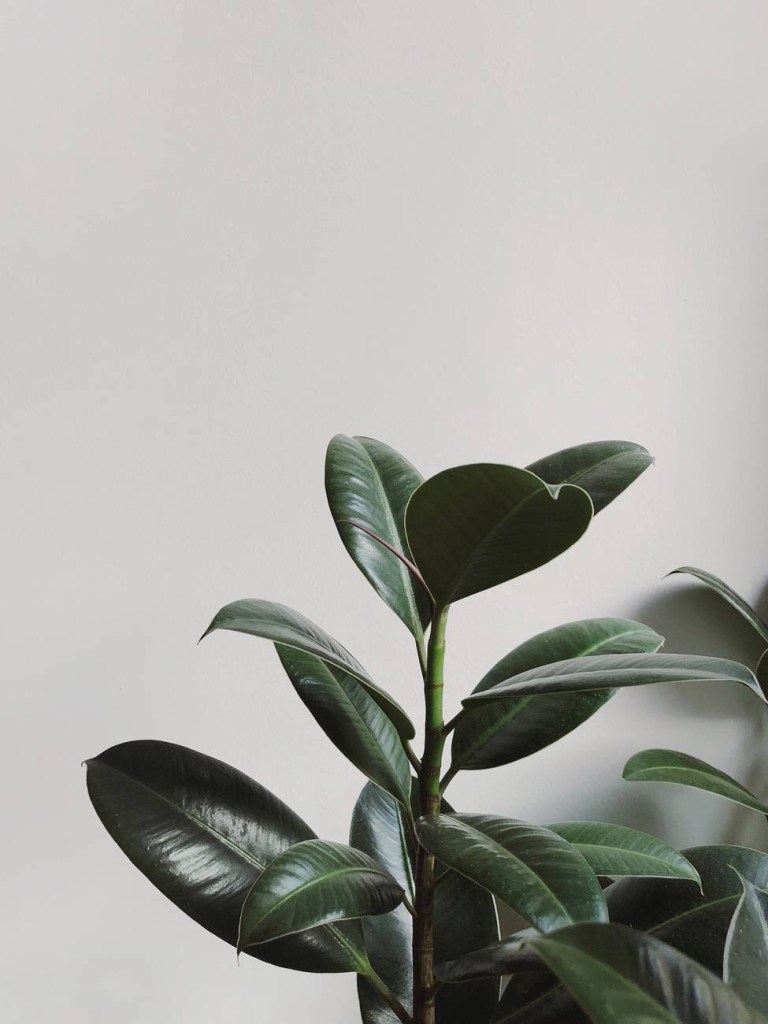
If a houseplant could communicate other than in mute, observable behaviors, it might emphasize the difference that soil can make to the health of a plant. In fact, Jesus stressed the qualities of soil in one of his parables, stating that soil is one of the determining qualities of production for a Christian, Mark 4:1-20. The quality of our soil, the substance from which we are grounded, matters immensely too. Without the right base, we are more prone to disease and limitations on our growth potential. Fortunately, we can take responsibility for the quality of our heart’s soil. We can turn to God, as did the Old Testament prophets, and ask for a fertile fielded heart, which is quality soil receptive of the teachings of the Gospel. There’s no better way to describe this than the words of the prophet Hoseah,
“Sow for yourselves righteousness and reap the fruit of loving devotion; break up your unplowed ground. For it is time to seek the LORD until He comes and sends righteousness upon you like rain.”
Hoseah 10:12, Berean Study Bible
If a houseplant needs to drain but is planted in moisture-retaining soil, the plant is at risk for root rot, mildew, bugs, and other diseases. If the plant’s soil becomes packed, it should be aerated so that oxygen and water can flow to the roots. Soil maintenance, while often overlooked by amateur growers, is essential to a healthy plant. The lesson is obvious. If you want to be healthy, choose a healthy base that will help the seeds of righteousness to germinate and to reduce susceptibility to blight.
I have always found nature to be a capable teacher. Anyone can be her student, whether indoors with houseplants or outdoors as a farmer, hunter, or explorer. Creation is one of several main testaments to the existence of God. I find the teaching of Creation to be practical enough for application and stirring enough for meditation. Here’s hoping that you do too.
“If you want to be healthy, choose a healthy base.”
 Tapestry Tales
Yes and yes to this post!!♥️
LikeLiked by 1 person
Great post!!! Maybe someday if I have my own house I’ll turn into a plant lady too. 😄
LikeLiked by 1 person
I love your final comment on healthy bases. I very much enjoy reading what you write ❤️
LikeLike